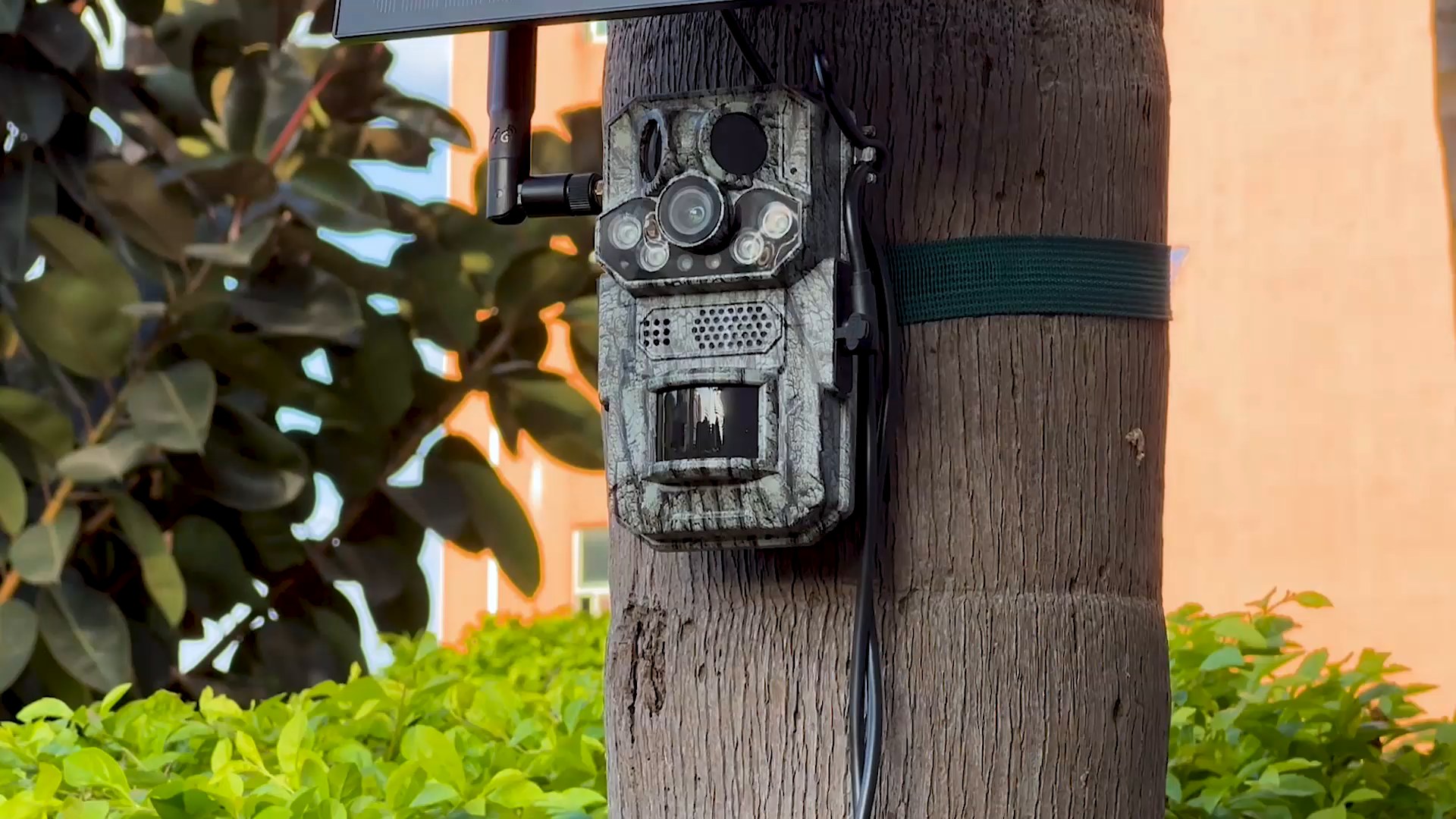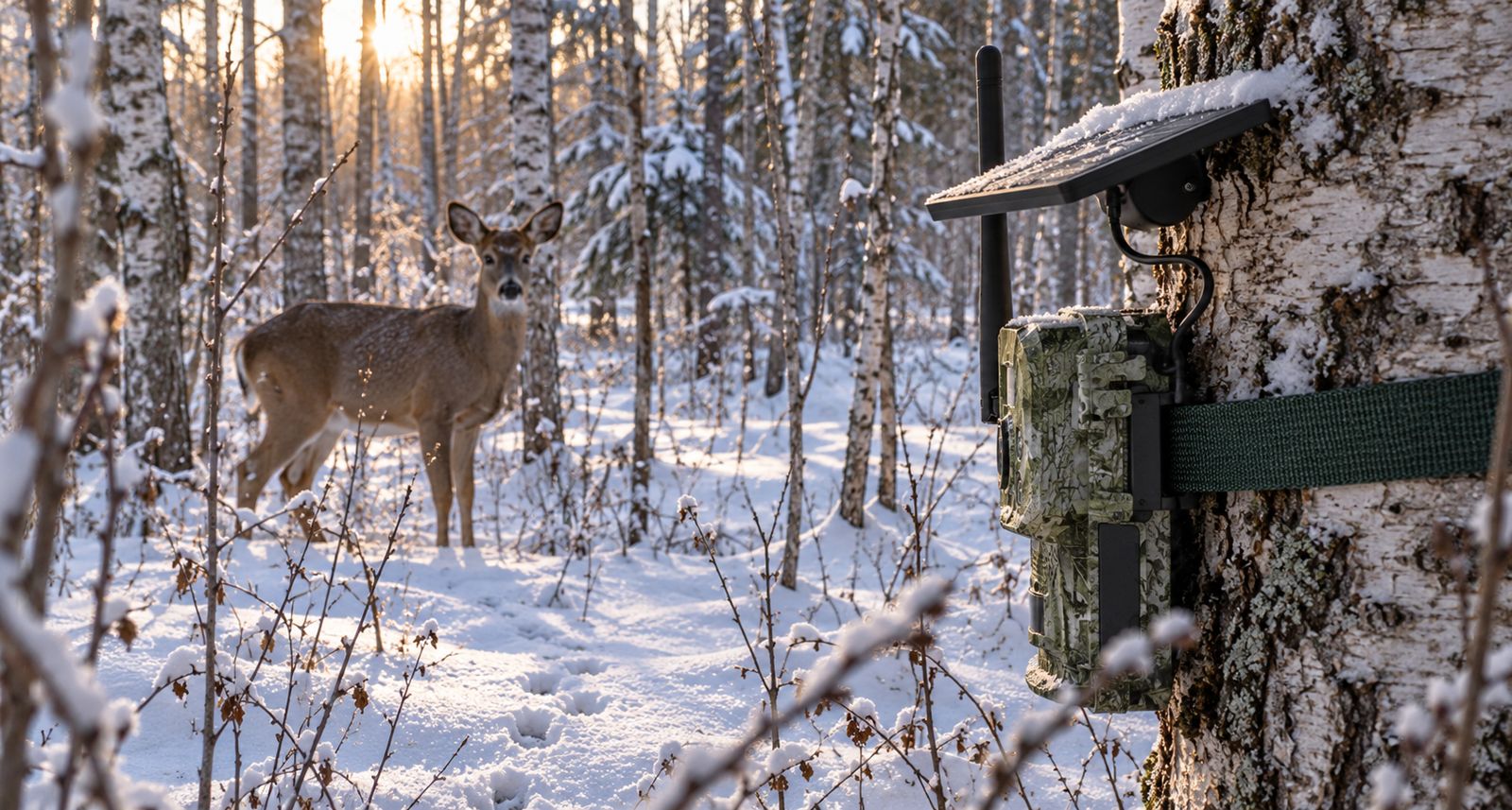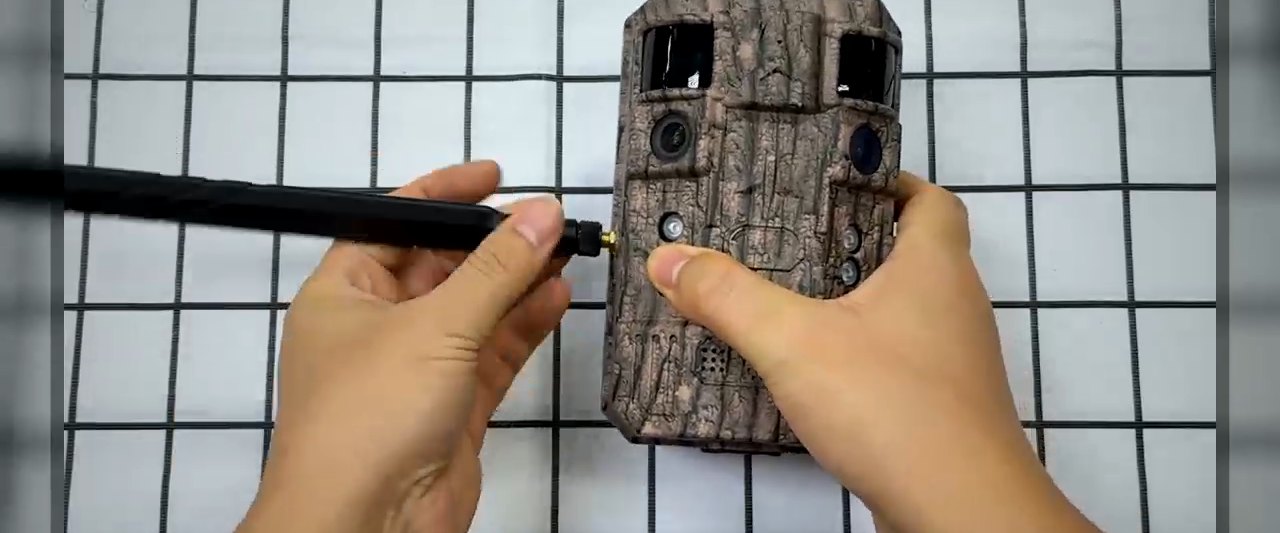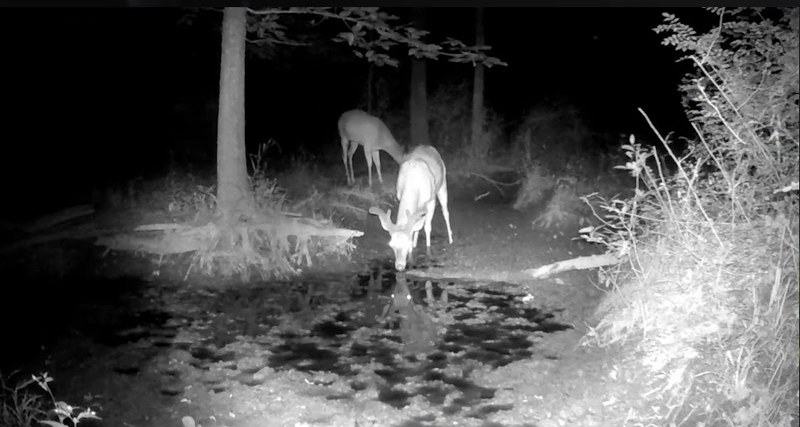
In short: Low-glow cameras use 850 nm infrared LEDs. They reach further and give brighter night photos, but the LEDs show a faint red glow when they fire. No-glow cameras use 940 nm LEDs. They show nothing, but night photos are darker and the range is shorter. Our trail cameras are all no-glow, at 940 or 950 nm.
What the nm number means
A trail camera takes night photos with infrared light. It has a bank of infrared LEDs on the front. When the PIR sensor triggers after dark, the LEDs light the scene and the camera records it in black and white.
The number in nanometers (nm) is the wavelength of that light. Visible red ends a little past 700 nm. At 850 nm the light is close enough to visible red that you see a dull red glow on the LEDs if you look at the camera while it fires. At 940 nm it is far enough out that you see nothing at all.
That is the whole difference between the two labels. “Low-glow” means 850 nm. “No-glow” means 940 nm or longer.
Range and image quality
The same thing that hides 940 nm light from the eye also makes it harder for the camera to use. Camera sensors respond less to 940 nm than to 850 nm, so with the same LEDs a no-glow camera gets less light back from the scene. Night photos come out darker, most of all toward the back of the frame, and an animal has to be closer to show up clearly.
| Low-glow (850 nm) | No-glow (940 nm) | |
|---|---|---|
| Visible when it fires | Faint red glow on the LEDs | Nothing visible to people or game |
| Night range | Longer | Shorter |
| Night photos | Brighter | Darker |
| Main drawback | The glow can give the camera away | Distant animals come out dim |
| Best fit | Private land, open fields, long shots | Public land, trails people walk, wary game |
| Our trail cameras | Not used | HC809, HC810 and HC808 at 940 nm; HC828 at 950 nm |
Neither type is better in every case. It is a trade between being seen and seeing further.
Who notices the glow
The 850 nm glow is small and only shows while the camera takes a photo. From the side, or with the camera well hidden, it is easy to miss. Face on in the dark, a person can spot it.
That matters most with people. On public land, near a road or along a trail other people walk, a glowing camera is a camera someone can find and take. No-glow removes that clue.
Game is a harder question, and hunters disagree about how much a red glow bothers deer. Many who hunt pressured deer choose no-glow so they do not have to find out.
Getting good night photos from no-glow
Because 940 nm gives up some reach, the camera design and the setup have to close the gap. On our cameras:
- HC809: four 940 nm LEDs and a low-light lens, with a night range of 65 ft (20 m). Its PIR reaches 50 to 65 ft (15 to 20 m), so an animal that triggers it is usually inside the lit range.
- HC810: an F1.6 low-light lens that keeps color at dusk, then 940 nm no-glow after dark. The twilight hours, when deer often move, come back in color instead of gray.
- HC828: 950 nm infrared across a 180 degree frame from two lenses.
Setup matters as much as hardware:
- Keep the subject close. Aim at a spot well inside the camera’s night range, such as a trail crossing or a feeder, not the far edge of a field. Closer is brighter.
- Clear the foreground. A branch or tall grass a few feet in front of the lens reflects the infrared back and washes out the photo. Trim it.
- Check the first night. If the animals come out too dark, move the camera closer to where they stand.
What a store or seller should stock
For most hunting customers, no-glow is the safer default. Its LEDs cannot give the camera away at night, and a buyer who keeps the subject in range gets usable night photos.
- Hunting stores: stock the HC809 as the main no-glow camera for trails and feeders, the HC810 for customers who want color at dusk, and the HC828 for wide fields and food plots.
- Amazon sellers: set expectations in the listing. Say 940 nm no-glow, give the night range where we publish one, and show a real night photo. A buyer who expects low-glow brightness from a no-glow camera is a buyer likely to be disappointed.
- Farm and security buyers: people who want to watch a gate or a yard without the camera being noticed also do well with a no-glow trail camera. For fixed jobs like these, look at our camo solar cameras as well.
See all trail cameras, and read cellular vs Wi-Fi trail cameras for how the photos reach the phone. For setup and placement help, visit support. For your own brand, see OEM and private label, and for a quote from 50 units, contact us.