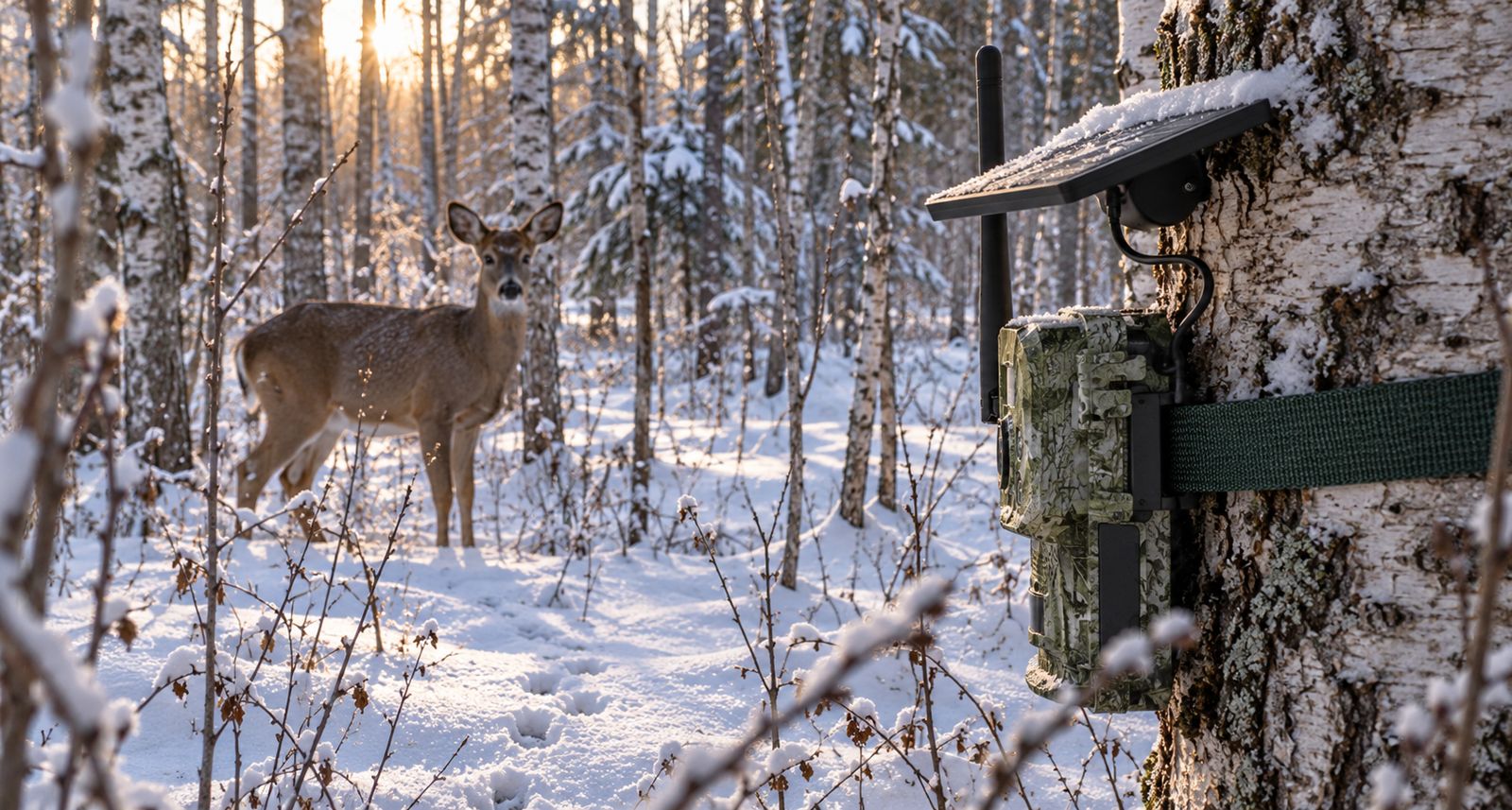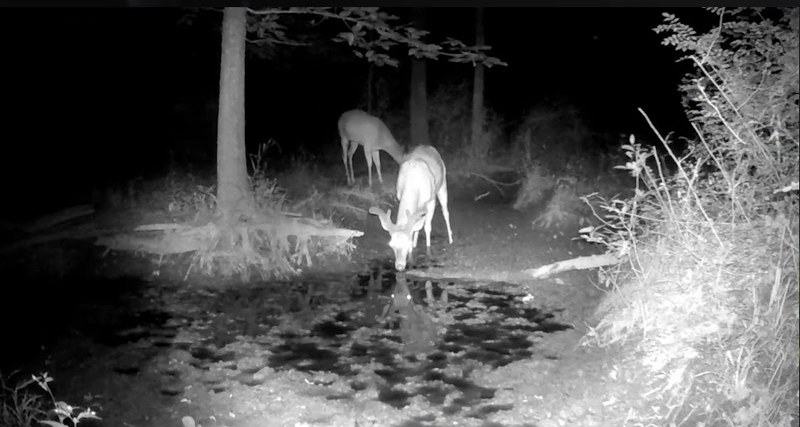
In short: Choose cellular for anything beyond sight of a house: hunting land, farms, cabins. Choose Wi-Fi only when the camera faces a garden or a yard within reach of the router.
How each one sends photos
A cellular trail camera carries a SIM card and a 4G modem. When the PIR sensor sees movement, it takes the photo, shrinks it and uploads it to the app over the mobile network. The owner sees it on the phone within a minute, wherever they are.
A Wi-Fi camera does the same over a home network. The upload is faster and free, but the camera has to be close enough to the router to hold a connection, and the router has to be powered.
Range and placement
Wi-Fi reaches about thirty meters in the open and much less through walls or trees. That is enough for a bird feeder or a driveway, not for a food plot a mile from the house.
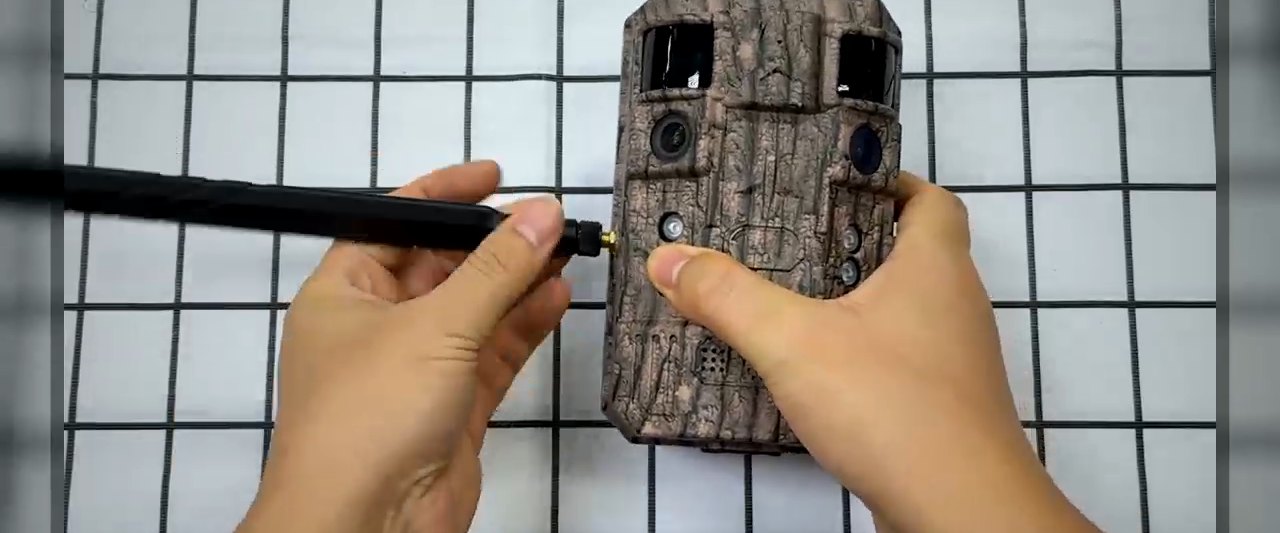
Cellular reaches as far as the carrier does. In weak areas an external antenna helps. The HC809 ships with a screw-on 5 dB antenna that holds signal where a phone shows one bar. Which bands the camera supports matters as much as the carrier name, see the carrier guide.
Running cost
Wi-Fi costs nothing after the camera. Cellular needs a data plan from a carrier. Many US brands also sell their own monthly plan, from about five to more than twenty dollars per camera, and the camera only works with it.
Our cameras ship with a tested SIM card and also take a nano SIM from any local carrier. There is no GoTrailCam plan, which matters to buyers comparing total cost over a season.
| Cellular 4G | Wi-Fi | |
|---|---|---|
| Reach | Anywhere with signal | About 30 m from the router |
| Delay | Under a minute | Seconds |
| Running cost | Carrier data plan | None |
| Power | Solar panel plus lithium | Solar or mains |
| Best for | Hunting land, farms, cabins | Gardens, yards, feeders |
Battery and solar
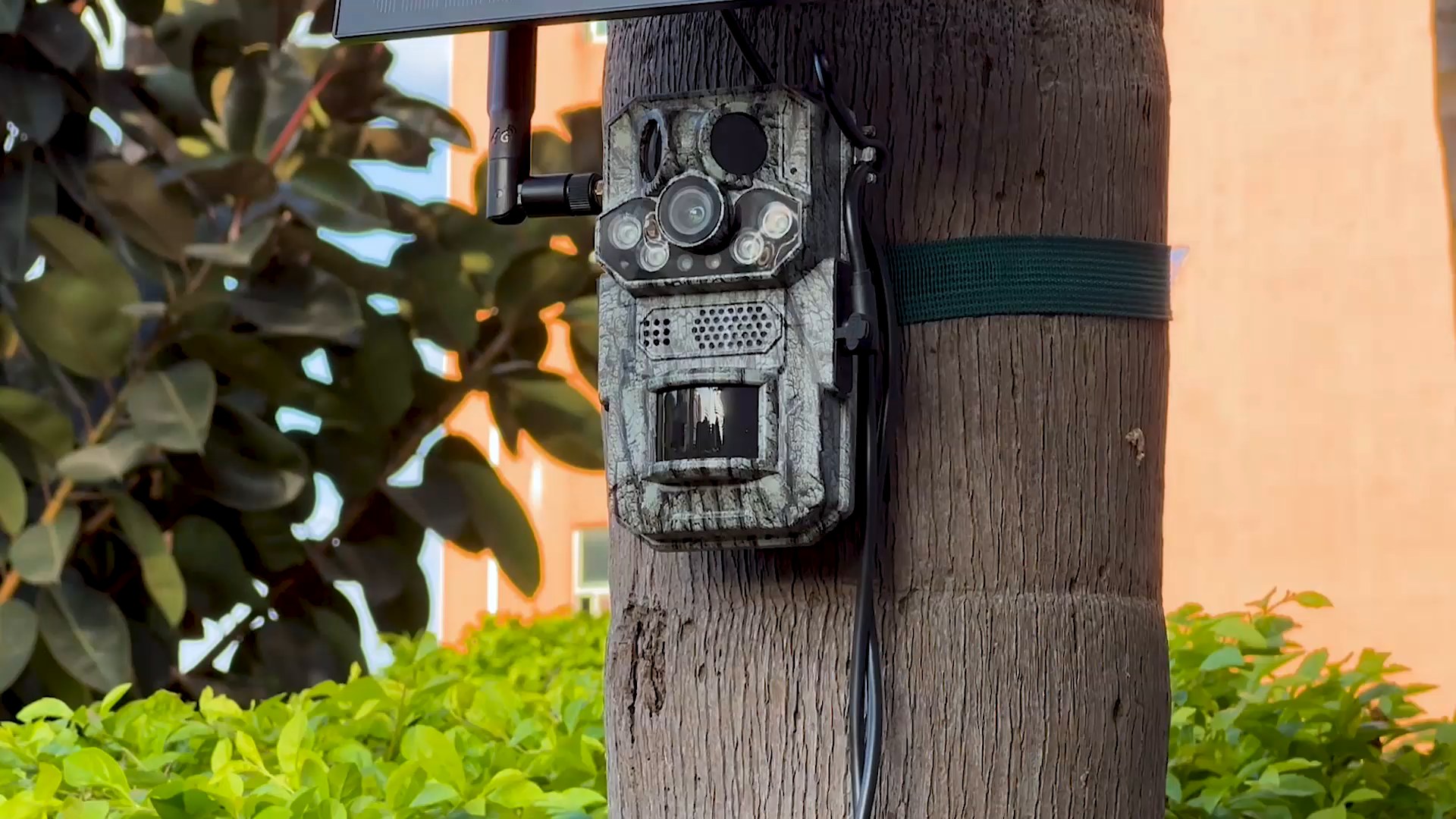
Uploading over 4G uses more power than saving to a card. That is why every trail camera in our range pairs a lithium pack of 7,800 to 15,600 mAh with a five-watt solar panel. In a sunny spot the panel keeps up with daily uploads, so nobody walks in to swap batteries. More in solar trail cameras explained.
Which one to stock
For hunting and farm buyers, stock cellular. It is what they search for, and it is where returns are lowest because the camera works where they need it. Keep one Wi-Fi or bird feeder model for garden buyers.
- Hunting stores: HC809 and HC828 in the US version.
- Farm and ranch: HC808 or a camo solar PTZ camera for gates and yards.
- Garden and gift: the RS1 bird feeder camera on Wi-Fi.
Buying for a store? Orders start at 50 units, see OEM and wholesale or ask for a quote.